The transition to electrified, low-emission economies in both New Zealand and Australia can only happen with sustained private investment, consumer participation, and clear, durable market settings.
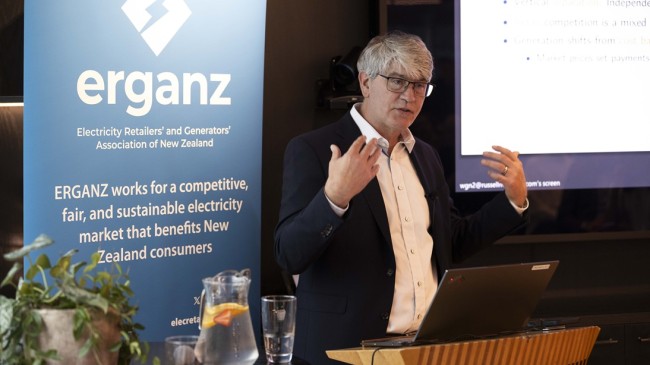
That was ERGANZ Chief Executive Bridget Abernethy’s message to delegates in her address to the Women in Energy & Renewables Conference in Sydney last Thursday.
Speaking about how policy and market changes are reshaping the energy sector, Abernethy outlined how New Zealand's energy system will go under a significant transformation over the next 25 years.
She described this as "the Big Shift", with New Zealand's electricity system to grow by as much as 80 percent by 2050 as electric vehicles, industrial process heat and data centres place greater demands on the grid. Abernethy also discussed how investors, businesses and households will all play a central role in delivering the future energy system.
Abernethy’s speech drew parallels between New Zealand’s transition with Australia’s electrification ambitions, outlining how both New Zealand and Australia are grappling with the "energy trilemma" of balancing security, equity, and sustainability. Australia’s core challenge is replacing a fossil fuel-heavy generation system, while New Zealand already generates around 90 percent of its electricity from renewable sources and must now tackle the more complex task of electrifying transport, heating and industry.
Meeting that demand will require a major infrastructure build, and Abernethy highlighted that around $42 billion of investment will be needed across the energy system by 2050. While the sector currently has a strong pipeline of new projects, she said attracting the additional capital required will depend on stable and predictable policy settings.
A key theme of the speech was the importance of investor confidence. Abernethy argued that energy infrastructure is capital intensive and long-lived, making policy certainty essential for ensuring projects can be financed and delivered. She warned that abrupt policy changes can increase risk, raise costs and ultimately make the energy transition more expensive for consumers.
The expansion of renewable generation will also reshape the electricity network itself. New Zealand's future system is expected to rely more heavily on wind, solar and battery storage, requiring significant investment in transmission and distribution infrastructure to connect new renewable energy resources and manage increasingly decentralised electricity flows.
Abernethy also stressed the importance of consumer engagement. Households are likely to play a much larger role in the future energy system through rooftop solar, batteries, electric vehicles and demand-response programmes. However, she said the transition must remain fair and affordable, with benefits available to renters, low-income households and people who may not have the resources to invest in new technologies.
Drawing lessons from Australia, Abernethy pointed to the rapid growth of rooftop solar, household batteries and virtual power plants as examples of how consumers can become active participants in the electricity system. She said New Zealand is closely examining these developments as it explores ways to unlock greater flexibility and improve system efficiency.
Her concluding message was that the energy transition will only succeed if governments, investors and consumers share confidence in the pathway ahead. Electrifying New Zealand will require cleaner and smarter energy systems, but reliability and affordability must remain at the centre of the conversation.